Topic overview
Glare reduction window film
Glare comes from too much visible light. Films that lower visible light transmission reduce glare — the trade-off is a slightly darker room, so choose the shade by room.
Key points
- Compare Visible Light Transmission (VLT) on data sheets.
- Test samples at the time of day glare is worst.
- Clearer films keep views; darker films cut more glare.
Before you choose a film
| Check | Why it matters | What to note |
|---|---|---|
| Time of day | Glare usually peaks in a window of a few hours, not all day | When the problem starts and stops, and in which seasons |
| Window direction | East, south and west glass create different sun angles and durations | Which elevation each problem window faces, and any reflection from nearby buildings, water or cars |
| Screen positions | Glare depends on where monitors sit relative to the glass | Which desks are affected, and whether moving or angling screens is possible |
| View and daylight priority | Darker films cut more glare but also more daylight and view | How much daylight and outward view the occupants want to keep |
| Samples on the actual glass | Small swatches indoors don't show real glare | Two or three shades tested at the worst time, viewed from the affected desks |
| Remaining shades or blinds | Film may reduce, not eliminate, direct low-sun glare | Which existing shades stay and when people will still use them |
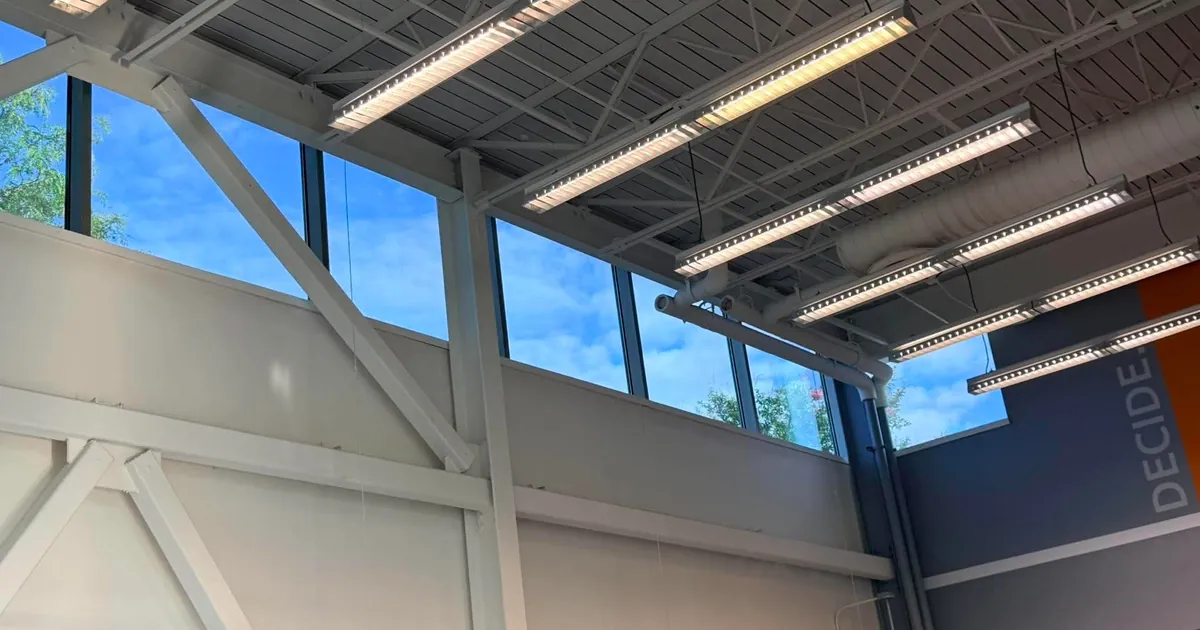
Actual Shore Tint & More installation — Jewish Community Center · Wilmington, DE; Exterior window film · gym glare.
View source case study ↗ — Jewish Community Center · Wilmington, DERead next
Ceramic vs. spectrally selective vs. reflective window film
Reflective films reject heat by reflecting it and look mirror-like. Ceramic and spectrally selective films aim to block heat while staying clear and low-reflection. The right choice depends on the view, the look you'll accept and the glass.
Read the guide →Commercial · 7 minChoosing commercial window film — and thinking clearly about ROI
Start with the problem — hot zones, glare complaints, fading, uneven HVAC. Any savings estimate should come from building-specific modeling or measured data, not a brochure percentage.
Read the guide →Film basics · 8 minCan window film reduce heat without making a room dark?
Often, yes. Visible-light transmission and total solar performance are separate figures, so some light films are designed to address solar heat while keeping a bright appearance. Solar-control film generally changes visible-light transmission, though; clear-looking does not mean unchanged daylight. Compare the exact film and shade on the same reference glass, then judge samples on your actual windows.
Read the guide →From learning to a quote
Ready for a real recommendation?
Estimates are handled by Shore Tint & More on DelawareWindowFilm.com, where their estimate form lives. An installer surveys your glass and recommends products in writing.