Residential · 8 min read
Which window is melting my siding? A Delaware homeowner's inspection checklist
Published · Last revised · Written by the Window Tint DE editorial team · Published by Shore Tint & More, a 3M Authorized Window Film Dealer. Editorial disclosure
What this checklist is for
Our reflected-sunlight explainer covers why some windows can concentrate sunlight onto siding or turf. This page is the practical next step: how to build a careful, dated record you can hand to a neighbor, a window manufacturer, a siding contractor or a film installer.
The goal is a good record, not a verdict. A homeowner can usually narrow the question to a few candidate windows. Confirming the actual reflection path, the glass type and the right fix is professional work.
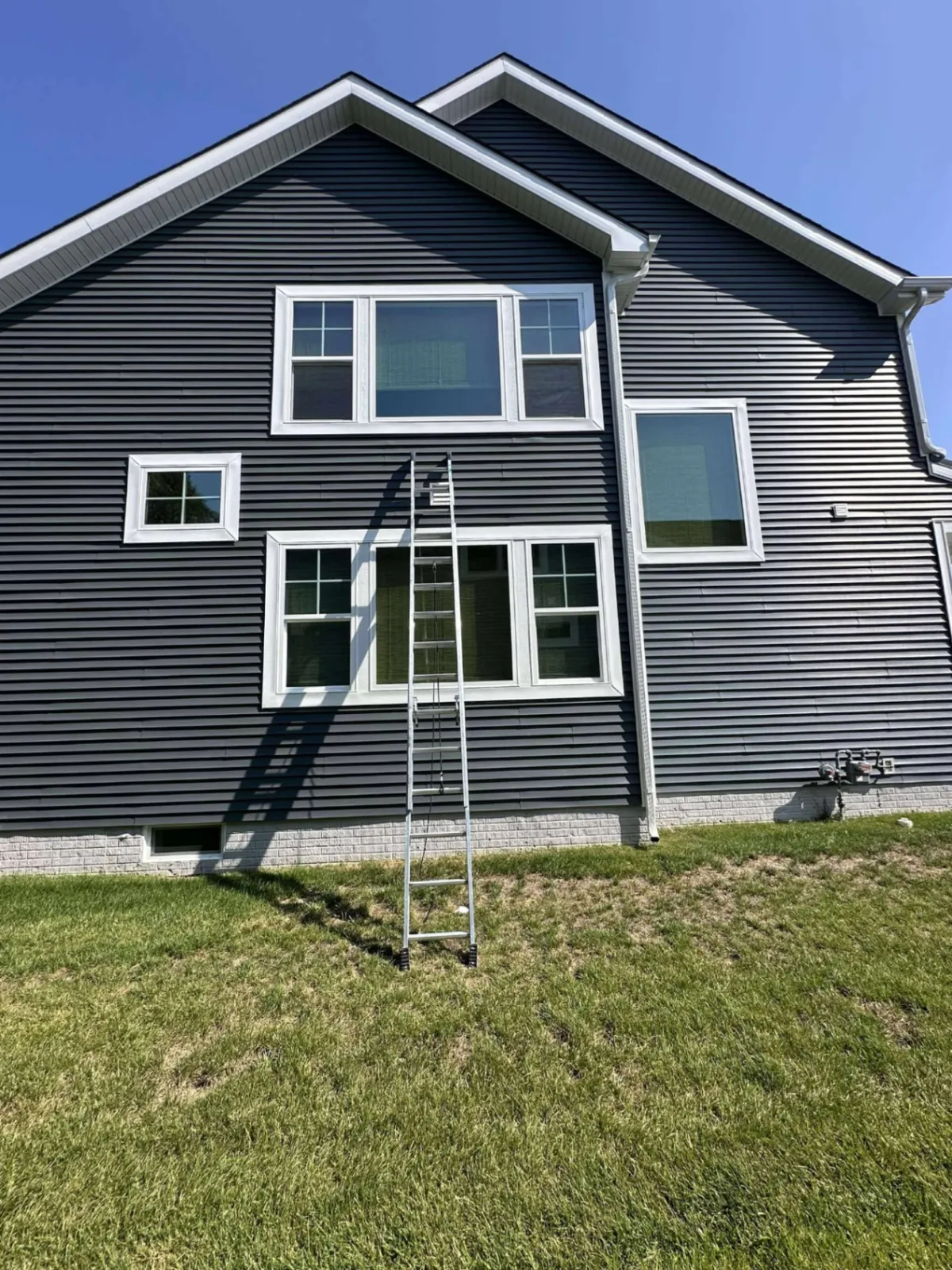
Actual Shore Tint & More installation — Schell Brothers home · Delaware; Exterior window film · elevation view.
View source case study ↗ — Schell Brothers home · Delaware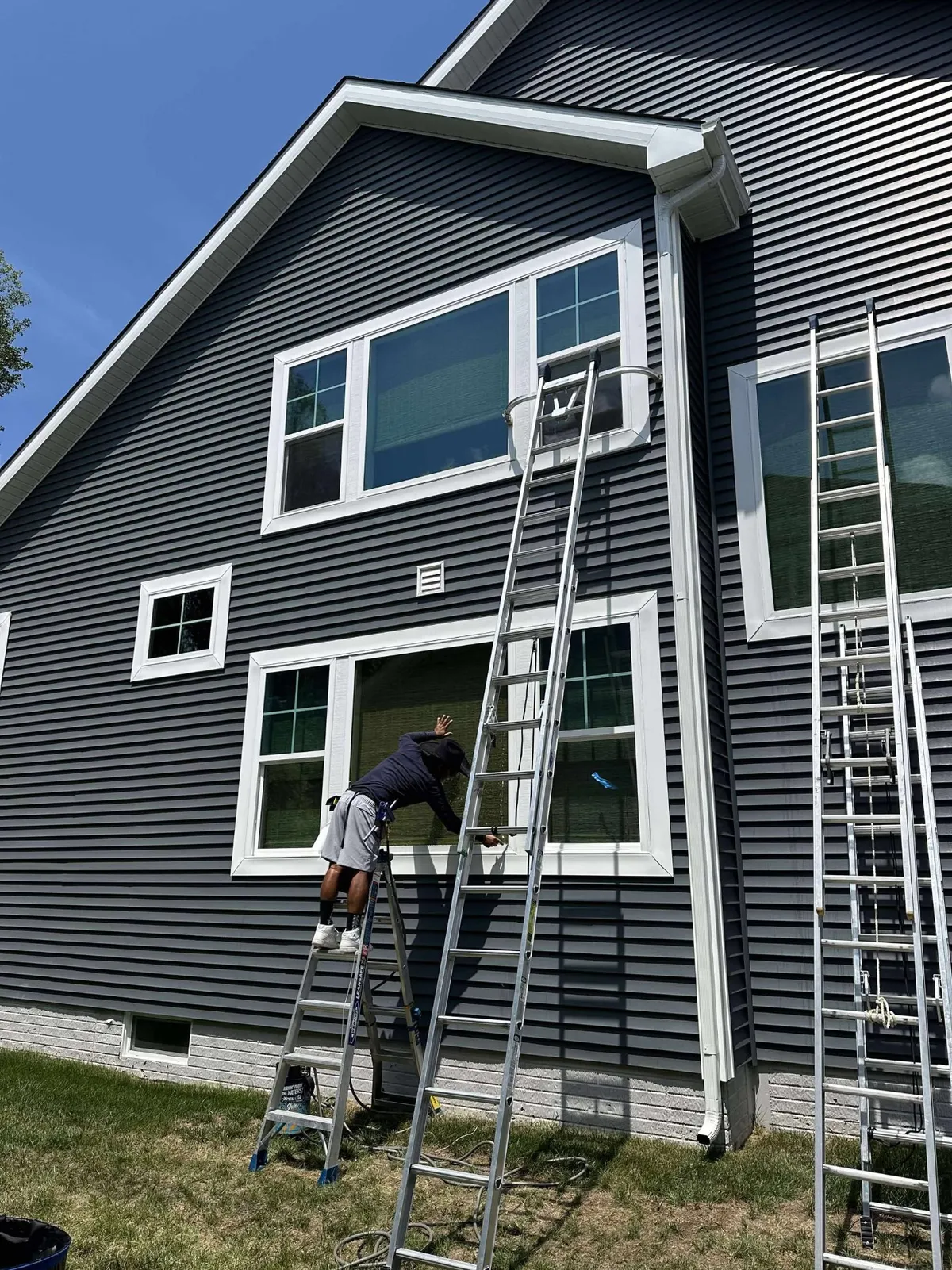
Actual Shore Tint & More installation — Schell Brothers home · Delaware; Exterior window film · professional ladder access.
View source case study ↗ — Schell Brothers home · DelawareStay safe while you look
- Never look directly at a bright reflection or at the window producing it. Concentrated reflected sunlight can hurt your eyes. Photograph the lit patch on the wall or ground, not the glare source.
- Don't touch siding, trim, turf or anything inside a bright reflected patch. Surfaces there can be hot.
- Don't climb ladders or onto roofs to inspect windows or siding. Work from the ground and from your own property; leave elevated access to a professional.
- Don't place thermometers, paper or other objects in the patch to test it.
- Keep children and pets away from the area while the patch is present.
What the photos on this page show
These are real Shore Tint & More installation photos from exterior window film work on a Schell Brothers home in Delaware. They show what an elevation survey looks at, and why ladder work belongs with a trained crew. They are installation records, not thermal measurements or before-and-after proof, and they don't show which window caused any particular damage.
Build a dated photo record
- Start the record now and arrange a professional assessment. A dated log helps the survey; it is not a reason to wait months or a full season while damage may continue.
- Photograph the damaged area straight on and at an angle, with something for scale such as a siding course or a downspout.
- Take a wider shot that shows the damaged wall together with the neighboring house or nearby glass.
- If a bright reflected patch appears, photograph it from a safe position, without looking at the source. Turn on your phone's date and time stamp or keep the original files with their metadata.
- Repeat at the same times on several sunny days. Note when the patch appears, where it moves and when it disappears.
- Record the weather (clear, hazy, cloudy). A patch that only appears on clear days is still useful information.
- Continue the record through changing seasons and after any repair. The sun's path changes through the year, so a patch seen in one season may move or disappear in another — keep observing after the assessment is arranged, not instead of it.
- Keep everything in one folder with a simple log: date, time, weather, what you saw and which photos go with it.
Narrowing down a suspected window
From the ground, note which windows, doors or other glass face the damaged area: on the neighbor's house, on your own house, or on a sunroom or patio door. Compare the times you saw the patch with which elevations are in sun then.
Treat this as a short list of candidates, not a conclusion. Reflections can come from more than one pane, from glass you didn't expect, or from a combination of surfaces. Distance alone isn't a reliable way to rule a window in or out.
| What to record | Why it helps | Limit to keep in mind |
|---|---|---|
| Date, time and weather for each sighting | Shows the pattern a professional can compare with the sun's position | A short record may miss other seasons |
| Where the patch lands and how it moves | Helps identify which elevation could be involved | Movement suggests a direction, not a specific pane |
| Which glass faces the damaged area | Builds a short list of candidate windows | Visible glass isn't proof it is the source |
| Screens, awnings, trees or fences in the path | Some existing shading may already interrupt reflections | Shading can change with seasons and growth |
| Type and age of the damaged material | Siding and trim products differ; the contractor needs this | Damage can have causes other than reflection |
| Any changes: new windows, removed trees, new neighbors' construction | A recent change can explain when damage started | Timing alone doesn't establish cause |
Neighbors and permission
- If the suspected window is on a neighbor's house, talk to them before anything else. Share your log and photos; don't accuse.
- Don't go onto a neighbor's property, photograph into their windows, or touch their glass without permission.
- Ask whether they know the window brand or have the original paperwork. Labels or a builder's warranty packet help a professional identify the glass.
- If you're in an HOA community, the association may have rules on exterior changes to either house. Check before anyone plans a fix.
Why a photo can't prove the cause
A photo of a bright patch next to warped siding shows two things at one moment. It doesn't show that the reflection caused the warping, how hot the surface got, or which pane produced the patch. Siding can also warp from installation issues, nearby heat sources or other conditions.
Industry guidance from the Vinyl Siding Institute notes that concentrated reflection depends on the geometry between the glass and the wall, that screens or shading may help, and that distance doesn't reliably predict whether damage happens. A professional review is what connects your record to a cause.
Questions to ask before any repair
- Siding contractor: is the damage consistent with reflected heat, or are other causes possible? Is a replacement product with different heat performance available?
- Window manufacturer (owner of the suspected window): is this glass known to do this, and what do they recommend? Does applying any exterior film affect the window warranty?
- Film installer: which panes would you survey, and how will you confirm the reflection path before recommending film?
- Everyone: what doesn't the proposal cover, and what happens if damage continues after the fix?
- Can a simpler step, such as a screen, awning or planting, interrupt the reflection first?
What a professional glass survey adds
A survey looks at the suspected glass itself: glass type and labels, coatings, the window's position relative to the damaged wall, existing screens and shading, and the window manufacturer's guidance. Any ladder or elevated work is done by the installer's crew, not the homeowner.
If exterior film is considered, ask for the specific product, its compatibility with that glass, any window-warranty implications and the limits of what it can do, in writing. Nobody can promise in advance that film will stop reflected-sunlight damage on every house.
FAQ
Can I figure out which window it is myself?
You can usually narrow it to a few candidates by noting which glass faces the damage and when the patch appears. Confirming the source takes a professional review.
Is it safe to look for the reflection?
Look at the lit patch on the wall or ground, never at the window producing it, and don't touch surfaces inside the patch or climb ladders.
Will exterior film fix it?
It is one option an installer may evaluate, but results depend on the glass and the situation, and the window manufacturer should be consulted. No one can promise it will work in advance.
How long should I keep records?
Don't delay an assessment while collecting seasonal records. Start the log now, arrange a professional review, then keep observing through changing seasons and after any repair so you can tell whether the pattern changed.
Sources & further reading
- Vinyl Siding Institute — solar reflection resources ↗
Industry guidance on reflected sunlight and vinyl siding: geometry matters, screens or shading may help, and distance isn't a reliable predictor.
- Delaware Window Film — Schell Brothers exterior window film work ↗
Source of the installation photos on this page, published by the same owner as this site.
- 3M building window films — product catalog ↗
Product descriptions are summarized from manufacturer materials. We don't reproduce performance figures; request the current data sheet for any product you're quoted.