Residential · 6 min read
Sunroom window film in coastal Delaware: why the glass survey matters
Last revised · Written by the Window Tint DE editorial team · Published by Shore Tint & More, a 3M Authorized Window Film Dealer. Editorial disclosure
Why sunrooms are different
- Overhead and sloped glass receives far more direct sun than vertical windows.
- Many sunrooms combine insulated units, tempered doors and older single panes — each with different film guidance.
- Large panes partly shaded by gutters, frames or nearby trees can heat unevenly.
- Coastal salt air and humidity make exterior-side work less common; most residential film is applied to the interior surface.
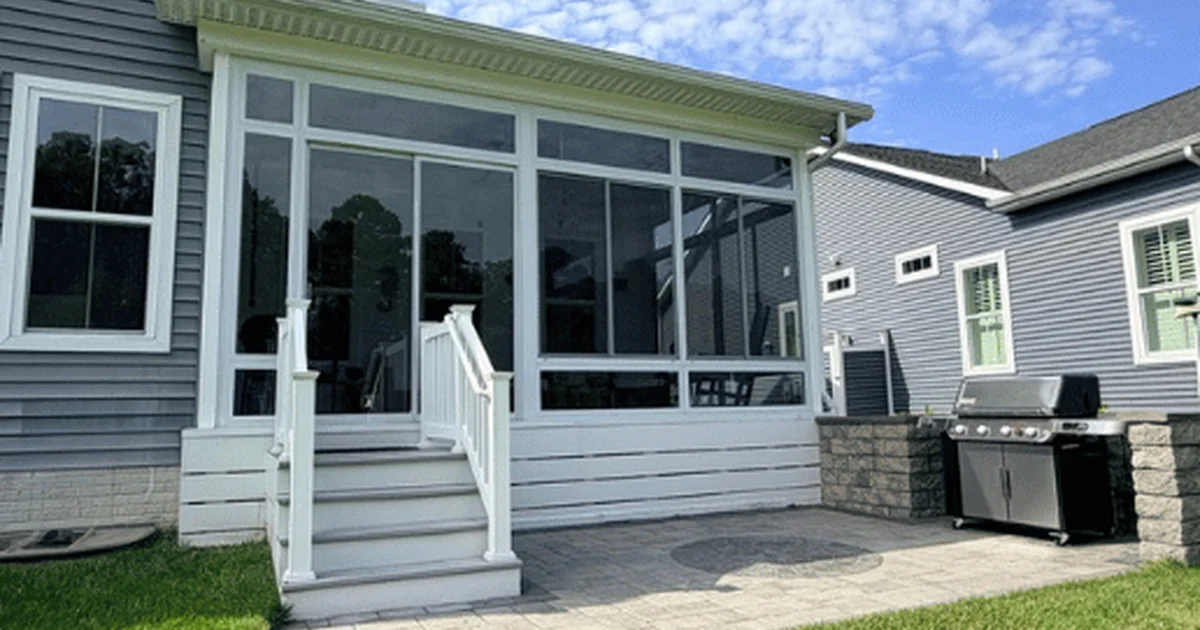
Actual Shore Tint & More installation — Coastal Club · Lewes, DE; 3M Ceramic 45 · sunroom.
View source case study ↗ — Coastal Club · Lewes, DEWhat a good survey records
- Glass type and approximate size for each pane, and whether units carry manufacturer labels.
- Orientation (west and south walls usually matter most) and roof-glass exposure.
- Seal condition — fogged insulated units are a glass problem that film won't fix.
- Your goals: comfort in the afternoon, glare on screens, fading of floors and furniture.
Realistic expectations
Film can make a sunroom more usable on bright afternoons and reduce glare, but a glass room will still be warmer than an insulated wall. Shades, ventilation and roof glass treatment all play a part. Avoid anyone who promises a fixed temperature drop without measuring your room.
A mixed-film design example: Seawinds, Dagsboro
One Shore Tint & More sunroom project at Seawinds in Dagsboro, confirmed by the business owner, covered about 156 square feet of glass with two different films: 3M Night Vision 15 on the side windows and a frosted film on the transoms. It is a useful illustration of the point above — one room, two jobs, two films — rather than a single product applied to every pane.
We describe the design only. The published project record does not include before-and-after temperature, daylight or energy measurements, and the project's photos are not reproduced here; they appear in the original project article linked below.
- Decide what each group of panes needs to do (eye-level side glass, high transoms, doors, roof glass) before choosing film.
- Check that each film is appropriate for that pane's glass type; a darker film on large insulated units needs the same compatibility review as any other.
- View the combination in place: darker side glass next to frosted transoms changes how the whole room looks from inside and from the yard.
- Read the Seawinds, Dagsboro sunroom project article ↗
Original Delaware Window Film project write-up, published by the same owner as this site.
- If you want heat control without a darker room →
- Condo sunroom? What to send your HOA first →
Sources & further reading
- 3M building window films — product catalog ↗
- Delaware Window Film — Seawinds, Dagsboro sunroom project article ↗
Product descriptions are summarized from manufacturer materials. We don't reproduce performance figures; request the current data sheet for any product you're quoted.